
Communal Cleaning Specification: Template and Contractor Checklist for Managing Agents
Most disputes about communal cleaning come from one thing: nobody wrote down what "clean" meant for this building. A specification fixes that. It is the document a managing agent uses to define the work, compare contractors on the same basis, and check afterwards that the work happened. This guide gives you a template you can copy, an example of how to handle a failed inspection, and a scoring sheet for comparing proposals. It is written for managing agents, block managers and RMC directors in England, and it works alongside our communal area cleaning service.
Key Takeaways
- A specification is the buyer's document. It names the areas, the tasks, the standard for each task and the evidence that proves it was met.
- Set the frequency for the actual building. There is no universal legal rule for how often communal areas must be cleaned.
- Cleaners can observe and report on fire doors and escape routes. The checks themselves remain the responsible person's duty.
- Compare contractors against the same task matrix. Look at scope, cover, supervision and evidence before you look at the total.
This guide is general information, not legal advice. Duties depend on the building, the lease and who the responsible person is. Check your position with a qualified adviser before relying on it.
What should a communal cleaning specification contain?
Three documents get confused. The specification says what must be done and to what standard. The schedule says when each visit happens. The contract covers term, notice, liability and payment. A good specification stands on its own so that you can hand the same document to three contractors and get three comparable proposals.
It should also separate the client's duties from the cleaner's scope. The managing agent decides what the building needs, who the contacts are and what happens when something needs a decision. The cleaner delivers the agreed tasks and reports what they find. Where those two meet, the specification should say who does what, in writing.
Our communal area cleaning standards guide covers typical cleaning outcomes and frequencies by area. This article is about the next step: turning those standards into a document you can tender, monitor and enforce.
What should you record about the block and its access?
Start with facts about the building. Contractors who quote without this information are guessing, and the guesses show up later as disputed extras.
Communal cleaning specification template: tasks, standards and evidence
The core of the document is a task matrix. Each line names an area, says whether the work is routine or periodic, sets a measurable acceptance criterion, and states the evidence and exception route. The table below is a worked example for an imaginary six-floor block with a lift. It is illustrative. A real specification states the frequency for every line, and the frequencies belong to your building.
| Area | Type and frequency | Acceptance criterion | Evidence and exceptions |
|---|---|---|---|
| Entrance lobby and door glazing | Routine. Frequency set for this block. | Floor free of visible soil; entrance glazing without streaks or finger marks; mats flat and vacuumed | Visit record. Access problems (locked cupboard, blocked lobby) logged as an exception. |
| Stairs, landings and handrails | Routine. Frequency set for this block. | No visible debris or residue; handrails wiped; floor dry or signed when wet; passage left clear | Task record per floor. Targeted photo of any area that needed extra work. |
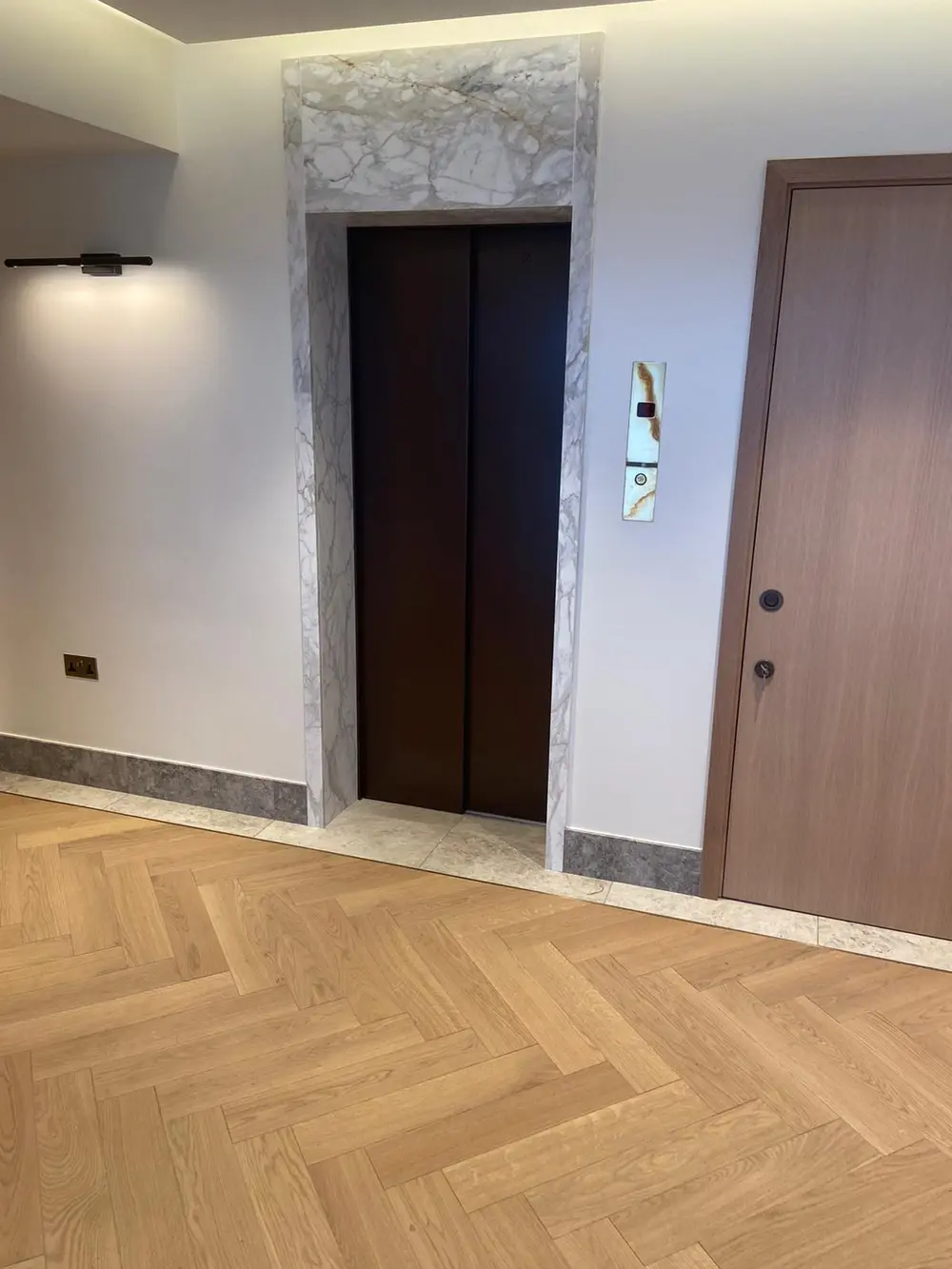
| Lift car and controls | Routine. Frequency set for this block. | Buttons, handrails and mirrors clean; floor and door tracks free of debris | Visit record. Faults, damage or smells reported to the named contact the same visit. |
| Bin store and bin area | Routine. Frequency set for this block. | Floor swept and washed; no loose waste around bins; access to bins left unobstructed | Before and after photo. Overflowing bins or dumped items reported, not removed, unless the scope says otherwise. |
| Internal communal glazing | Periodic. Frequency set for this block. | Agreed panes clean on both sides within reach; frames and sills wiped | Dated record against the periodic calendar. |
| Carpet extraction and hard-floor machine scrub | Periodic. Frequency set for this block. | Agreed areas treated; floors safe to walk on before the cleaner leaves | Before and after photos of agreed sample areas; signed off by the named contact. |
| Fire doors and escape routes (observation only) | Every visit. Frequency set for this block. | No door wedged open by cleaning activity; no cleaning equipment left in an escape route; closers not interfered with | Any door that does not close, damaged closer or obstruction logged and passed to the named contact on the day. |
Two things make this table useful. The acceptance criterion is something an inspector can see, so a dispute becomes "does this landing meet the line?" rather than "is it clean enough?". And every line has an exception route, so a locked cupboard or a blocked door produces a record, not a silent skip. This is a commissioning tool, not a statutory checklist, and it should be adjusted after a site walk.
How do you set a cleaning frequency for this building?
Resist copying another block's frequencies. A four-flat conversion with a shared hall needs a different pattern from a six-floor building with a busy lift and a shared bin store. Start from footfall, number of floors, the surfaces involved, how quickly each area gets dirty, and what residents report. Set a starting frequency for each line, then agree a review point, say after the first quarter, to adjust it against what inspections found.
Resident complaints are a useful input but not the only one. Some blocks over-clean low-traffic areas and under-clean the lift and bin store, and the way to see that is to compare inspection results by area, not by visit.
Fire doors and escape routes: what a cleaner does and what stays with the responsible person
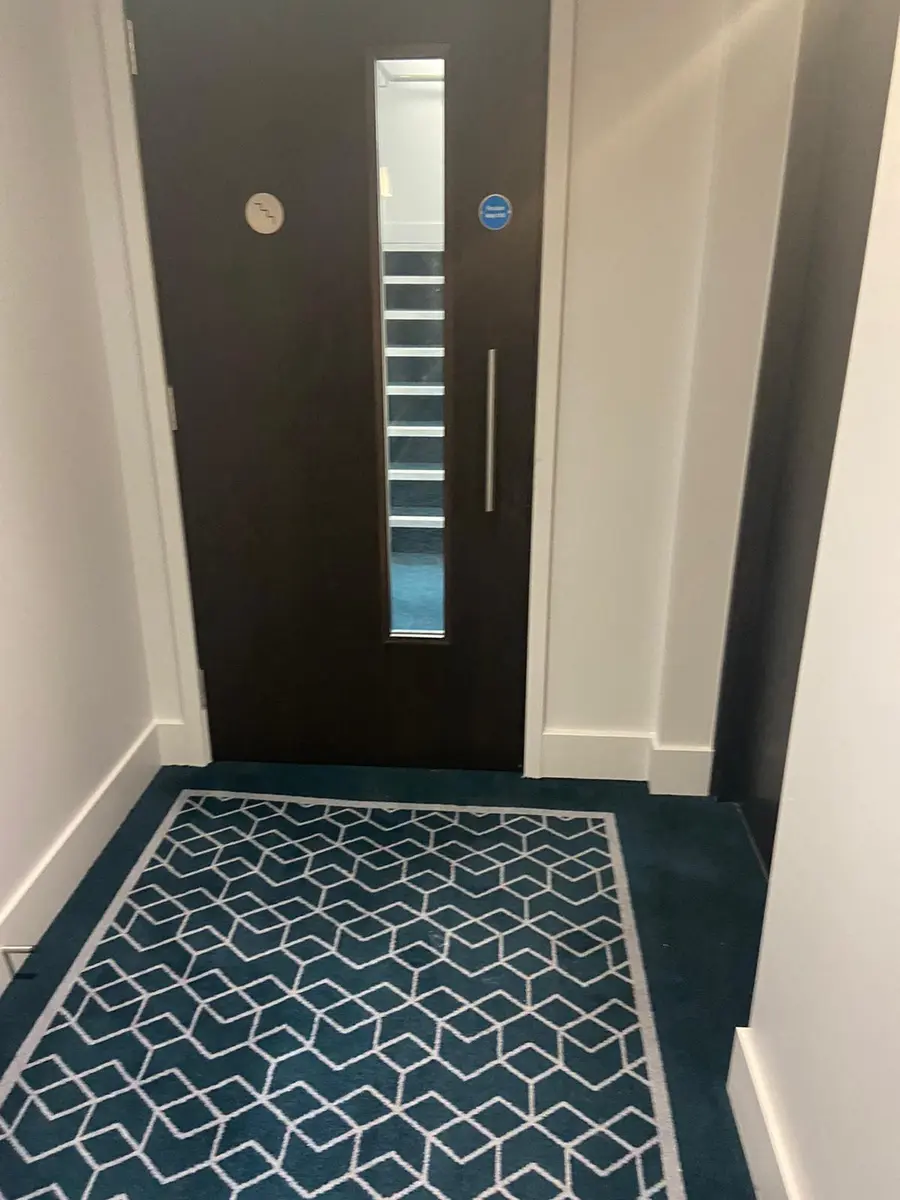
Cleaning touches fire safety in two ways: what cleaners do to doors and routes, and what they notice. Both belong in the specification, with the boundary stated plainly.
On routes, the Regulatory Reform (Fire Safety) Order 2005 says that "where necessary in order to safeguard the safety of relevant persons", the responsible person must ensure that routes to emergency exits and the exits themselves are kept clear at all times (article 14). In practice, that means cleaning equipment, bags and wet-floor stands should not obstruct a stair or corridor used for escape.
On doors, the Fire Safety (England) Regulations 2022 came into force on 23 January 2023 and apply in England. Where a building is above 11 metres in height, the responsible person must check communal fire doors at least every three months. They must also use best endeavours to check flat entrance doors at least every 12 months (regulation 10). Government guidance for purpose-built blocks of flats adds that responsible persons remain responsible for fire safety in their premises (gov.uk), so engaging a cleaning contractor does not move that duty.
A sensible specification therefore says four things. Cleaners never wedge or prop a fire door. They leave no equipment in an escape route. They do not interfere with door closers. And they report a door that does not close, a damaged closer or an obstruction to the named contact on the day. That report is an observation, not an inspection, and a cleaner's note is not a record of fire-door certification.
We cover damp, mould and what cleaning can and cannot fix in a separate guide, damp, mould and hygiene in communal hallways, so this article does not repeat it.
How do you prove delivery and close the loop on a failed inspection?
Attendance is the minimum. A dated visit record proves the cleaner was there, but it does not prove the landing met the standard. A good reporting set-up records what was done, what was inspected, what failed, who was told and when the correction was checked.
Photographs help where a standard is disputed, and Klean Touch uses timestamped photo reports and supervisor audits for this purpose. No law requires them, so decide in the specification what you want, how images are stored and who can see them. Avoid photographs of residents or of anything that identifies a flat.
Here is how a failed inspection should run. This is an illustrative sequence, and the timings are set in your own specification, not by law.
- The supervisor inspects the third-floor landing and finds residue along the skirting that does not meet the stairs-and-landings line.
- The failure is logged with the area, the date and a photograph.
- The named contact is told within the time the specification sets for exceptions.
- The contractor corrects it at an agreed re-clean time.
- The supervisor re-inspects, records the pass and notes the cause, for example a product or method change.
- If the same line fails again, it goes on the agenda for the next review meeting.
When a resident says the cleaning was not done, this record is what you open. It shows whether the visit happened, what was checked and what was corrected, which is a stronger answer than a rota.
How do cleaning records support service-charge transparency?
Leaseholders pay for communal cleaning through the service charge, and the lease decides what can be charged. Under section 19 of the Landlord and Tenant Act 1985, service charge costs count only "to the extent that they are reasonably incurred" and only if the services are "of a reasonable standard" (section 19). A specification with inspection records is the evidence behind both tests: it shows what was agreed and what was delivered.
One point is easy to miss at contract stage. A qualifying long-term agreement is one for a term of more than twelve months (section 20ZA). Consultation applies to such an agreement where, in an accounting period, a leaseholder's relevant contribution would exceed £100 (regulation 4 of the 2003 consultation regulations). There are exceptions, so treat it as a checkpoint for legal review before you sign anything longer than a year. The Leasehold Advisory Service explains leaseholders' rights and consultation on its website.
This guide does not cover service-charge disputes. If a leaseholder questions a charge, point them to the lease and to LEASE, not to the cleaner.
How do you compare communal cleaning contractors?
Send every contractor the same specification and ask them to respond line by line, including any deviations. Then score the proposals on the same criteria before you compare totals. A total only means something when the scope behind it is identical. The sheet below is an editorial tool you can adapt, not an industry standard.
| Criterion | A good answer shows | Red flag |
|---|---|---|
| Same scope, line by line | The response follows your task matrix line by line. Deviations are listed, not buried. | A generic "communal cleaning" description with no reference to your areas. |
| Periodic work and exclusions | Window, carpet and deep-clean work is shown separately with a clear calendar. Exclusions are named. | Periodic work "as required" with no schedule. |
| Staffing and absence cover | Explains who attends, who covers sickness and holidays, and how you are told. | No answer on cover, or "we will do our best". |
| Supervision and inspection | Named supervisor, stated inspection routine, and a way for you to inspect too. | Inspection described only as "regular checks". |
| Evidence and exception reporting | Says what you receive after a visit, what counts as an exception and how fast you hear about it. | A signature sheet is the only evidence. |
| Fire-safety boundary | States that cleaners observe and report, and that statutory checks stay with the responsible person. | Implies the contractor takes over fire-safety compliance. |
| Contract term, notice and handover | Term, notice and review points are stated. Handover from the outgoing contractor is planned. | Long minimum term with no review point or exit route. |
| Insurance and employment evidence | Certificates and checks available on request, and you know how to ask. | Vague assurance with nothing to inspect. |
Score each line from 0 to 3, note why, and ask the strongest two contractors the same follow-up questions. If you are replacing a current contractor, our guide to switching cleaning company covers the handover.
Get a block-specific scope
Klean Touch offers a free site visit and written proposal for London blocks, built around your areas, access and reporting needs.
Frequently Asked Questions
What should be included in a communal cleaning specification? ↓
The block and its shared areas, access arrangements, a task matrix with the frequency, acceptance criterion and evidence for each line, periodic work and exclusions, how visits are recorded, what counts as an exception, who is told and when, how complaints are handled, and the term, notice and review points of the contract.
How often should communal areas in a block of flats be cleaned? ↓
There is no single legal frequency. It depends on the building: footfall, number of floors, surfaces, how quickly areas get dirty and what residents report. Set the frequency for each line of the specification and review it after the first few months. Our communal area cleaning standards guide gives typical frequencies by area as a starting point.
Are cleaners responsible for statutory fire-door inspections? ↓
No. Under the Fire Safety (England) Regulations 2022, checking communal fire doors is a duty of the responsible person. A cleaner can avoid wedging doors, keep escape routes clear and report a door that will not close, but that observation is not a substitute for the required check.
What records should a managing agent receive after cleaning? ↓
At minimum, proof the visit happened and which tasks were done, plus any exceptions: areas that could not be cleaned, defects found and anything needing a decision. Targeted photographs help where a standard is disputed. No law requires photo reports, so agree in the specification what you want and how images are stored.
Can a communal cleaning contract require Section 20 consultation? ↓
It can. A long-term agreement is one lasting more than twelve months, and consultation applies where a leaseholder’s contribution under it exceeds the statutory threshold in an accounting period. Check the lease and take advice before signing a longer term, because the rules have exceptions.
Last reviewed 12 November 2026. We review this guide when the rules it describes change.
Related Reading
Book a communal cleaning site visit
Get a free site visit and a written proposal that follows your specification.