
School Cleaning Specification: Template and Tender Checklist for School Business Managers
A school that tenders its cleaning without a written specification ends up comparing quotes for different jobs. One contractor assumes classrooms only, another includes holidays, a third leaves out washroom supplies, and the cheapest number wins by quietly doing less. A specification fixes that. This guide gives school business managers, bursars and estates leads a template to copy, a way to handle term-time and holiday work, the contractor safeguarding points to settle, and a scoring sheet for comparing proposals. It sits alongside our school cleaning service in London.
Key Takeaways
- The specification is the school's document. It sets the scope suppliers quote against and the standard the school inspects.
- DfE guidance separates day-to-day, periodic and emergency cleaning. Write each into the specification, and put term-time and holiday work on separate programmes.
- Keeping children safe in education 2026 says safeguarding requirements for contractors should be set out in the contract. Ask for the level of check, the evidence and the supervision plan.
- Decide who owns washroom supplies before tender, and compare proposals against the same scope before you compare totals.
This guide is general information for schools in England, not legal, procurement or safeguarding advice. Your procurement route and safeguarding decisions remain yours, and a school should check its own rules and take advice where needed.
What is a school cleaning specification?
The specification says what must be done and to what standard. The schedule says when each visit takes place. The service levels say how you will know the standard was met. The contract covers term, notice, liability and payment. Keeping them separate makes tenders clearer and disputes shorter.
The Department for Education's buying guide for schools covers cleaning services and is the best starting point for what to decide (DfE cleaning services guidance). It asks buyers to think about the number of weeks cleaning is needed each year and to distinguish day-to-day cleaning, periodic or non-routine cleaning and emergency cleaning. Your specification should do the same.
What should you record about the site, calendar and access?
Gather this before you ask anyone to quote. Without it, contractors guess, and the guesses become variations after you sign.
School cleaning specification template: areas, tasks and standards
The core of the document is a task matrix. Each line names an area, sets the calendar, gives an acceptance criterion an inspector can see and says what evidence proves the work. The example below is illustrative. A real specification fills in frequencies and hours after a site assessment, and we have deliberately left those out, because a figure copied from another school will be wrong for yours.
| Area | Calendar | Acceptance criterion | Responsibility and evidence |
|---|---|---|---|
| Classrooms | Term-time routine; holiday periodic | Floors free of visible soil; bins emptied; desks and high-touch surfaces cleaned as agreed; rooms left tidy for the morning | Completion recorded per room. Rooms left locked or occupied logged as exceptions. |
| Pupil washrooms | Term-time routine; daytime checks assigned separately | No visible soil or cleaning residue; floor safe and usable; agreed supplies available | Contractor signs completion. The school names the daytime owner. Exceptions go to the named contact. |
| Corridors, halls and stairs | Term-time routine; holiday machine scrub | Floors free of debris; no wet areas left unsigned; fire exits and routes left clear | Visit record. Any blocked exit or damaged floor reported the same visit. |
| Dining areas | After service | Tables, chairs and floor cleaned after service; no food residue left | Completion recorded. Catering-side cleaning excluded unless stated. |
| Staff rooms and offices | Term-time routine | Surfaces cleaned; kitchen areas wiped; waste removed | Completion recorded. |
| Sports hall and changing rooms | Term-time routine; holiday deep clean | Floors cleaned for use; changing areas and showers cleaned and disinfected as agreed | Completion recorded; maintenance faults reported. |
Add an exclusions list at the bottom. Typical entries are catering-side kitchen cleaning, specialist or biohazard work, and ductwork. Anything not named should need a written instruction before work starts. Duties under the School Premises (England) Regulations 2012 stay with the school: regulation 6 requires premises to be maintained so that, "so far as is reasonably practicable, the health, safety and welfare of pupils are ensured" (regulation 6). A cleaning contract helps you meet that duty but does not hand it over.
How do you separate term-time cleaning from holiday deep cleans?
Treat them as two programmes. Term-time cleaning is the daily routine around the school day. Holiday cleaning is periodic work that needs empty buildings: floor stripping and machine scrubbing, carpet extraction, washroom descaling and deep cleaning of kitchens and changing areas. Each programme needs its own scope, dates, access and completion check.
Agree who signs off at the end. A return-to-school inspection a day or two before pupils arrive, with a short list of exceptions and a deadline for fixes, prevents the worst surprise of the autumn term. Include inset days and half-terms in the calendar, because they are often the only time some rooms can be cleaned properly.
What safeguarding and DBS evidence should you ask contractors for?
Keeping children safe in education (KCSIE) 2026 took effect on 1 September 2026 and replaced the previous edition. Its section on contractors makes six points a specification should reflect (KCSIE 2026, paragraphs 368 to 373).
- Schools should set out their safeguarding requirements in the contract with the contractor.
- Schools should ensure any contractor, or employee of the contractor, who is to work at the school has had the appropriate level of DBS check. Contractors engaging in regulated activity relating to children require an enhanced DBS check including children's barred list information.
- For other contractors whose work gives them an opportunity for regular contact with children, an enhanced DBS check without barred list information is required.
- Where a contractor has no opportunity for regular contact with children, the school should decide whether a basic DBS check is appropriate.
- A contractor on whom no checks have been obtained must never be allowed to work unsupervised or engage in regulated activity. The school decides the appropriate level of supervision.
- If a worker is self-employed, the school should either obtain the DBS check or ask to see the certificate and make sure it is at the level the school requires. Identity should always be checked on arrival.
Notice what this means for tender questions. "All our staff are DBS checked" does not tell you the level, the evidence or the supervision. Ask for each. Klean Touch cleaners hold their own DBS checks, with evidence available on request, but which level a school needs and how workers are supervised is the school's decision.
Out-of-hours work does not remove these questions. Agree who can enter, who signs people in, what happens if a regular cleaner is replaced at short notice, where keys and alarm codes are held, and what happens when cleaning overlaps with a breakfast club, an after-school club or a letting.
Washrooms and hygiene supplies: who owns what?
Washroom problems come from undefined ownership. Cleaning is the contractor's job. Daytime checks, restocking, buying supplies and reporting faults are separate tasks, and each needs a named owner. DfE's guidance lists maintenance of stock levels and the reporting of faulty equipment among the points to agree.
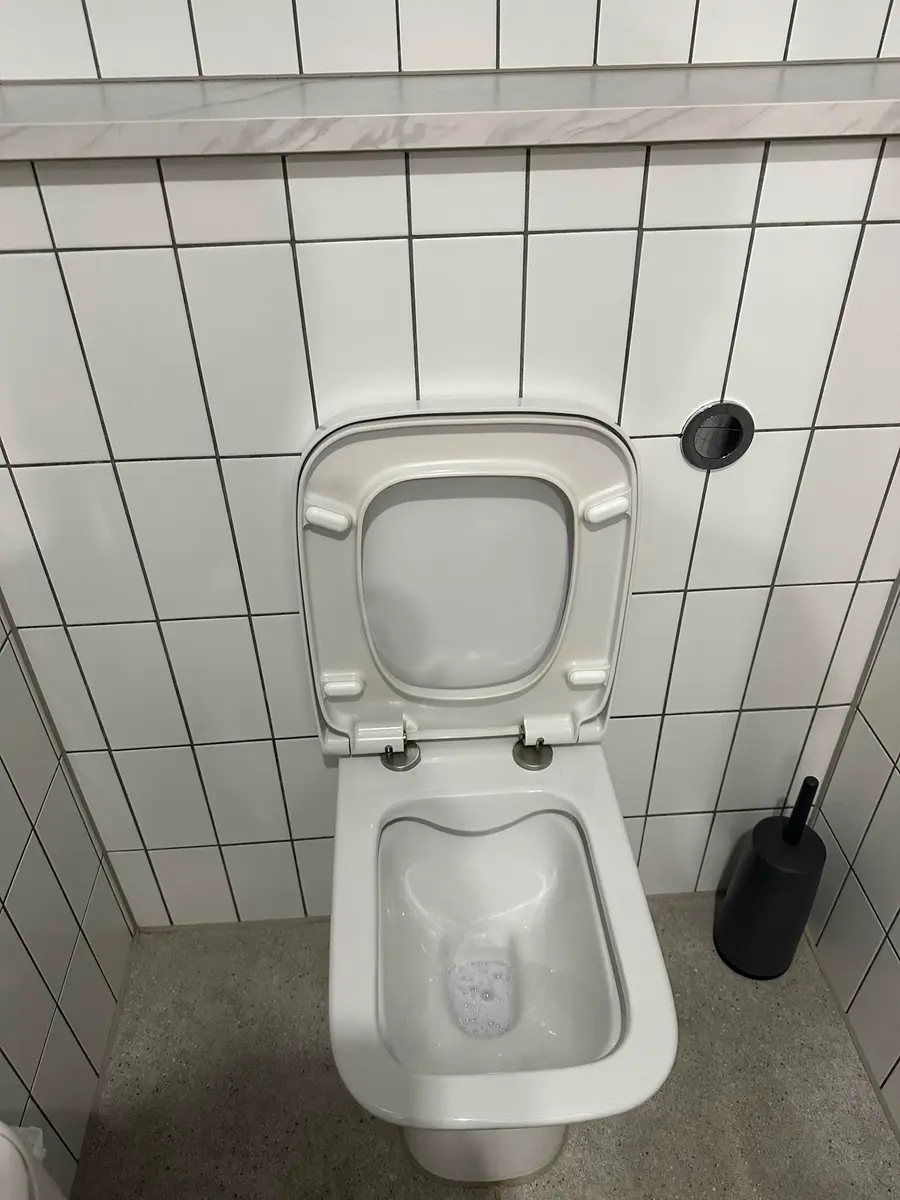
Write down three things. Who checks soap, paper and hand-drying stock during the school day. What the minimum stock level is before someone restocks. And what the fallback is if a cleaner misses a visit. Chemical safety, COSHH and infection-control detail sit in our school and nursery COSHH guide, so this article does not repeat them.
How do you adapt the specification for a nursery or early-years room?
Keep the same structure and change four things. First, the calendar: a nursery may run year-round, and a school's term dates may not apply. Second, room-release times: set when each room is empty so floors and mats can be cleaned properly. Third, soft items such as toys, mats and play areas need their own lines. Fourth, the boundary between practitioners and the cleaner: which tasks staff do during the day and which belong to the contract. Spell that out. Practitioners in some settings report being expected to clean rather than tidy, with nobody having agreed where the line sits.
One caution. KCSIE is statutory guidance for schools and colleges. A standalone nursery should check the Early Years Foundation Stage framework, whose current version took effect on 1 September 2026 (EYFS framework), and its own safeguarding arrangements, before copying school contractor wording.
How do you monitor performance and handle absence and failed audits?
DfE's guidance points to quality inspections, absence management, timekeeping and managing underperformance as things to settle in advance. Turn each into a line in the specification: a named supervisor, an inspection routine you can also use, how the school is told when a cleaner is off, and what counts as a failed audit.
Then script the response. Record the failure against the task line, tell the named contact, agree a correction time, re-inspect and sign off. A repeat failure goes to the review meeting. Run a joint inspection in the first weeks of the contract so both sides agree what the standard looks like. Klean Touch uses timestamped photo reports and supervisor audits for this, but no law requires them, so decide what evidence you want and how images are stored.
Be realistic about hours. Teachers on public forums describe cleaners who cannot finish within their allotted time. If the task list does not fit the hours, the job will quietly shrink, so check the proposed staffing against the matrix.
What about contract term, notice and changing provider?
State the actual start date, term, extension options and notice period. Add a mobilisation plan: key handover, induction, safeguarding checks and a first-fortnight inspection. DfE's guidance also lists TUPE considerations when changing provider, and it is worth raising early because transfer of existing cleaning staff can affect timing. Take advice on employment and procurement rules. This guide does not cover them.
The guidance gives an example contract length, but tenders use different terms, so do not treat any single term as required. Whatever you choose, build in a review point so a weak first year is not a three-year problem.
How do you compare cleaning proposals fairly?
Send each contractor the same specification and ask for a line-by-line response with deviations listed. Apply pass-or-fail requirements first, such as safeguarding evidence and insurance. Then score the rest against the same criteria. A total is meaningful only when the scope behind it is identical. The sheet below is an editorial tool, not a statutory formula, and published tenders use different quality and price weightings.
| Criterion | A good answer shows | Red flag |
|---|---|---|
| Same scope, line by line | The response follows your task matrix and lists any deviations. | A generic school cleaning description that does not mention your rooms. |
| Term-time and holiday programme | Separate plans for term-time and for each holiday, including inset days and return-to-school sign-off. | Holiday work "as required". |
| Safeguarding and DBS evidence | States the level of check for each role, what evidence you can see, and how identity is confirmed on arrival. | "All staff are DBS checked" with no level, no evidence and no mention of supervision. |
| Staffing and absence cover | Explains who attends, how long they have, who covers absence and how the school is told. | No cover arrangement, or hours that do not match the task list. |
| Washroom and supplies ownership | Clear split between cleaning, daytime checks and restocking, with a missed-visit fallback. | Ownership left undefined. |
| Monitoring and corrective action | Named supervisor, inspection routine, a way for you to inspect, and a stated route for failed audits. | Inspection only "as needed". |
| Chemical and safety documentation | Risk assessments and safety data sheets available on request. | A "COSHH approved" label with nothing behind it. |
| Term, notice and mobilisation | States contract dates, notice and extension terms, and plans the start-up and handover. | Unclear term or no mobilisation plan. |
Score each line from 0 to 3, record why, and put the same follow-up questions to your top two. If you are unhappy with a current contractor, see our guide to switching cleaning company.
Talk through your specification
Klean Touch offers a free site visit and written proposal for London schools and nurseries, scheduled around term times and your hours.
Frequently Asked Questions
What should a school cleaning specification include? ↓
The areas and their use, the school calendar, a task matrix with the standard and evidence for each line, term-time and holiday programmes, safeguarding and access arrangements, washroom and supplies ownership, how performance is monitored and what happens when it falls short, and the contract term and notice.
What is the difference between a cleaning specification and a cleaning schedule? ↓
The specification says what must be done and to what standard. The schedule says when each visit happens. You need both, but the specification is what you send contractors to quote against and use to judge the work.
Do school cleaning contractors need DBS checks? ↓
Keeping children safe in education says schools should ensure contractors have had the appropriate level of DBS check, and that checks, supervision and identity verification depend on whether the work involves regulated activity or regular contact with children. The school sets the safeguarding requirements in the contract. Ask any contractor for the level of check, the evidence and the supervision arrangements, not a general assurance.
Should holiday deep cleaning be included in the contract? ↓
Many schools include it as a separate periodic programme with its own scope, dates and sign-off, because the work needed in holidays differs from daily cleaning. DfE guidance says to specify periodic or non-routine cleaning separately from day-to-day work.
Who is responsible for replenishing school washroom supplies? ↓
Whoever the specification says. Decide it before tender: who checks stock during the day, who restocks, who buys supplies and what happens if a supply runs out between visits. DfE guidance lists maintenance of stock levels as a point to agree.
Last reviewed 12 November 2026. We review this guide when the guidance it describes changes.
Related Reading
Book a school cleaning site visit
Get a free site visit and a written proposal built around your term calendar.